
Criminal Court Cases in San Diego County
The Superior Court of California, County of San Diego hears felony, misdemeanor, infraction, and related criminal matters. Its work includes arraignments, preliminary hearings, motions, trials, sentencing, probation hearings, and mental health proceedings. Criminal files are divided among Central, North County, South County, and East County branches. Traffic and minor offenses use a separate division. The clerk at the filing branch keeps the official case file, while the District Attorney maintains prosecution-side information.
This split matters. A San Diego County police report describes an incident, and a jail entry documents custody. Neither is the criminal court file. Charges become court records only after prosecutors file them. The file then tracks what the judge and parties did, including any dismissal, plea, trial result, or sentence. A person following an arrest to its outcome should match the booking details to the filed case number and read the disposition.
San Diego Court Index Search Fields
The Court Index party-name search is the main public locator for San Diego County criminal cases. Choose Criminal as the case type. If the courthouse is unknown, use Unknown-All and narrow the result with a date-year, party role, or birth date. More complete names make the search faster and reduce false matches. The index limits returned selections, so broad common-name searches may need more detail.
The official party-search screen shows how these filters work together.
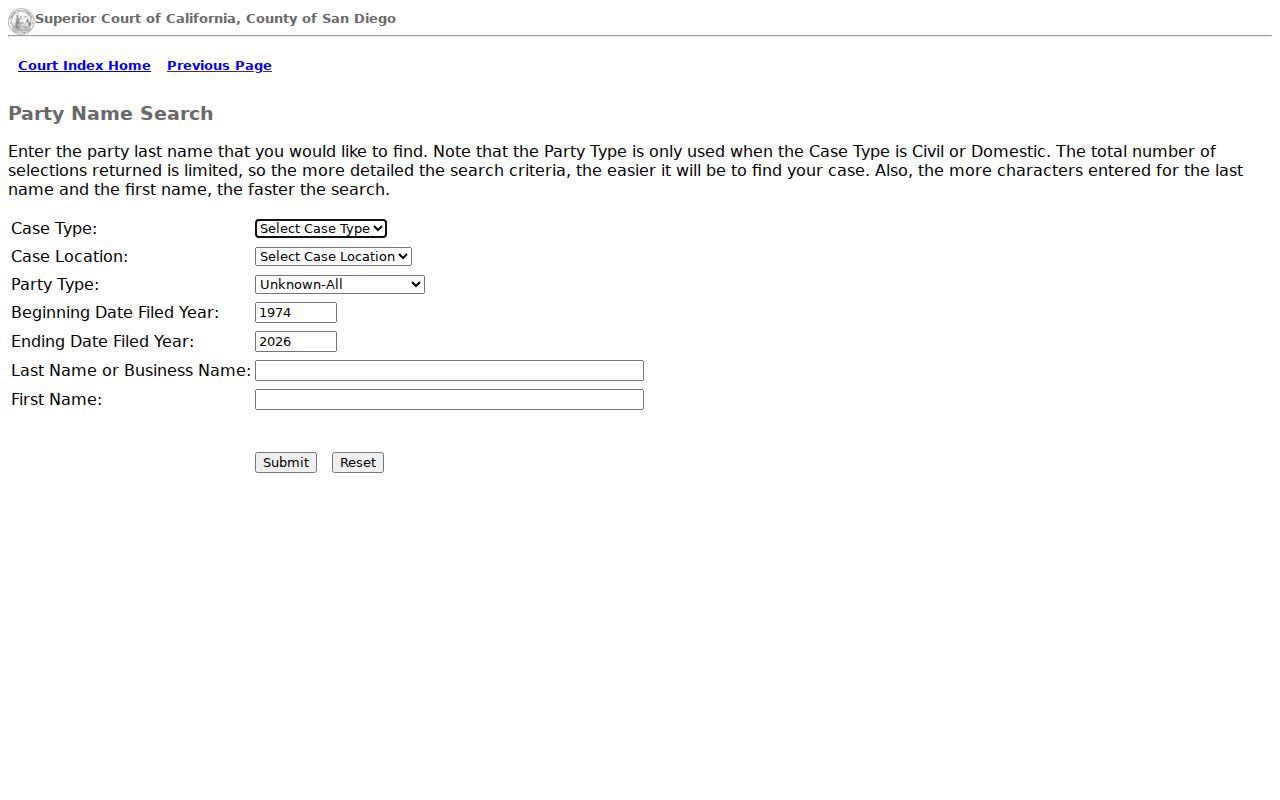
The captured form confirms that case type, location, party type, year, name, and date of birth can help isolate the right court case.
| Field | Type | Required | Use |
|---|---|---|---|
| Case Type | Select | Yes | Choose Criminal for filed criminal cases. |
| Case Location | Select | No | Use a known branch or Unknown-All. |
| Party Type | Select | No | Narrows the person's role in the case. |
| Name | Text | Yes for party search | Add more characters for a tighter match. |
| Date-Year or DOB | Date | No | Helps distinguish people with similar names. |
San Diego County Case Record Searches
Use the index as a locator, not as the complete file. It may exclude juvenile cases and infractions. Some misdemeanor and limited civil data at certain locations may cover only ten years. Once the index supplies a case number and location, direct the copy request to that branch. The District Attorney Case Information Search, which accepts a last name or court case number, is a useful second check but remains a prosecution locator rather than the clerk's full docket.
- Open the Court Index and select the criminal case type.
- Search by party name, adding location, year, role, or birth date when needed.
- If the case number is known, use the separate case-number search and enter the compact format without dashes.
- Record both the case number and filing location shown in the result.
- Ask that branch clerk for inspection, ordinary copies, or certified copies.
Note: An empty index result does not prove that no San Diego County case exists; exclusions and archived records can explain the gap.
San Diego Case Numbers Without Dashes
The case-number search offers a faster route when a citation, notice, or older document already provides the number. The court's shortcut format removes dashes. Copy each letter and digit carefully. A single omitted character can route the request to no result or the wrong file.
The official case-number form displays that format rule.
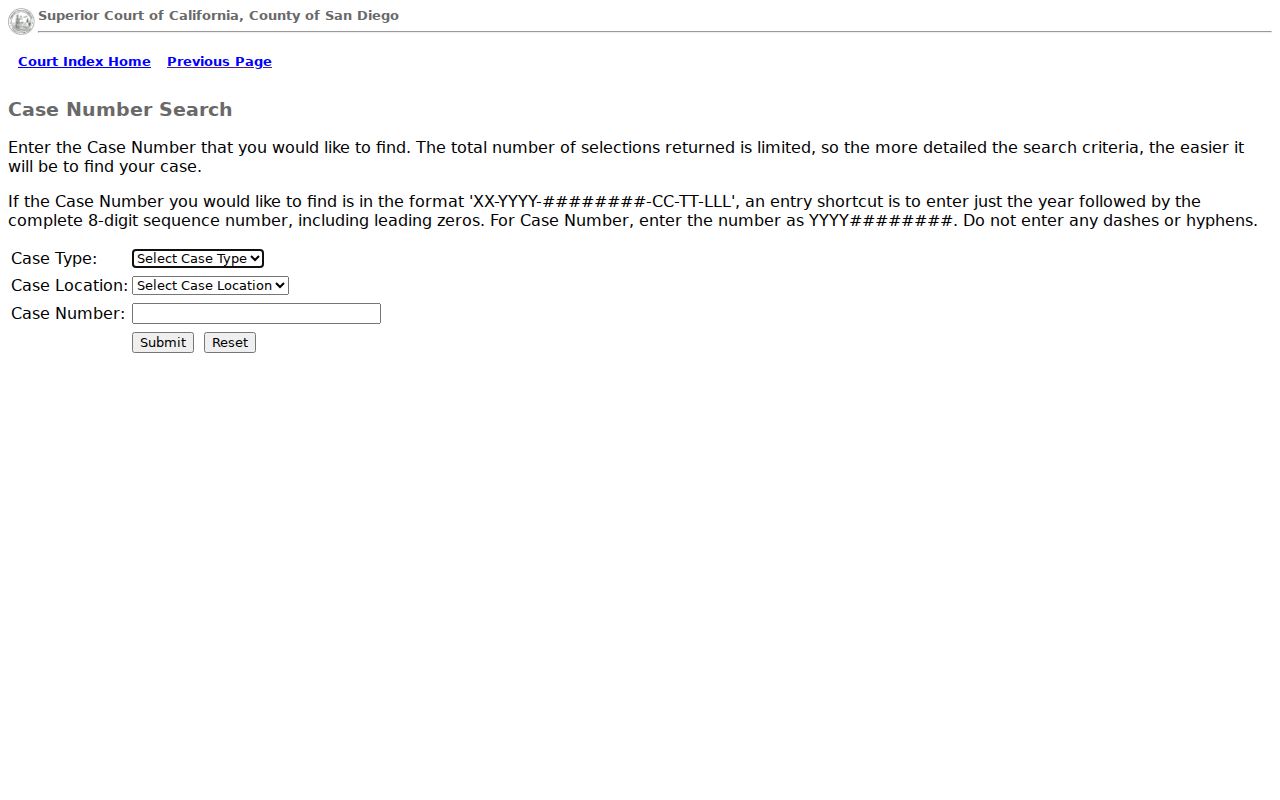
This search is best for confirming a known identifier before contacting the clerk. A name search remains better when only the person's identity and a rough date are known.
What a Criminal Case File Contains
A San Diego County criminal case file ties allegations to court action. Read the charging document first, then the chronological docket. The disposition states how each count ended. A minute order may supply hearing results, while judgment and sentencing records show the court's final orders. Terms such as “dismissed,” “acquitted,” and “convicted” are not interchangeable.
| Case Number and Court | The unique identifier and San Diego County branch holding the file. |
|---|---|
| Charging Document | The complaint or information and counts prosecutors formally filed. |
| Docket Entries | A dated log of hearings, motions, orders, pleas, and filings. |
| Hearing Dates | Past events and scheduled appearances, subject to later change. |
| Disposition and Judgment | The result for each charge, such as dismissal, plea, acquittal, or conviction. |
| Sentence and Conditions | Custody, probation, fines, programs, or other orders imposed by the court. |
A filed charge is an allegation. The disposition is the field that explains what the court ultimately did. For an arrest-to-outcome review, compare this file with the separate San Diego County arrest search record.
Four San Diego County Courthouse Routes
San Diego County's justice system is decentralized. Central Criminal uses the first and second floors at 1100 Union Street in San Diego. East County criminal and traffic matters route to 250 East Main Street in El Cajon. North County uses 325 South Melrose Drive in Vista, while South County criminal and traffic records are on the second floor at 500 Third Avenue in Chula Vista. The Kearny Mesa Branch at 8950 Clairemont Mesa Boulevard handles traffic and minor offenses.
The court's record-location directory is the source to check before traveling or mailing a request.
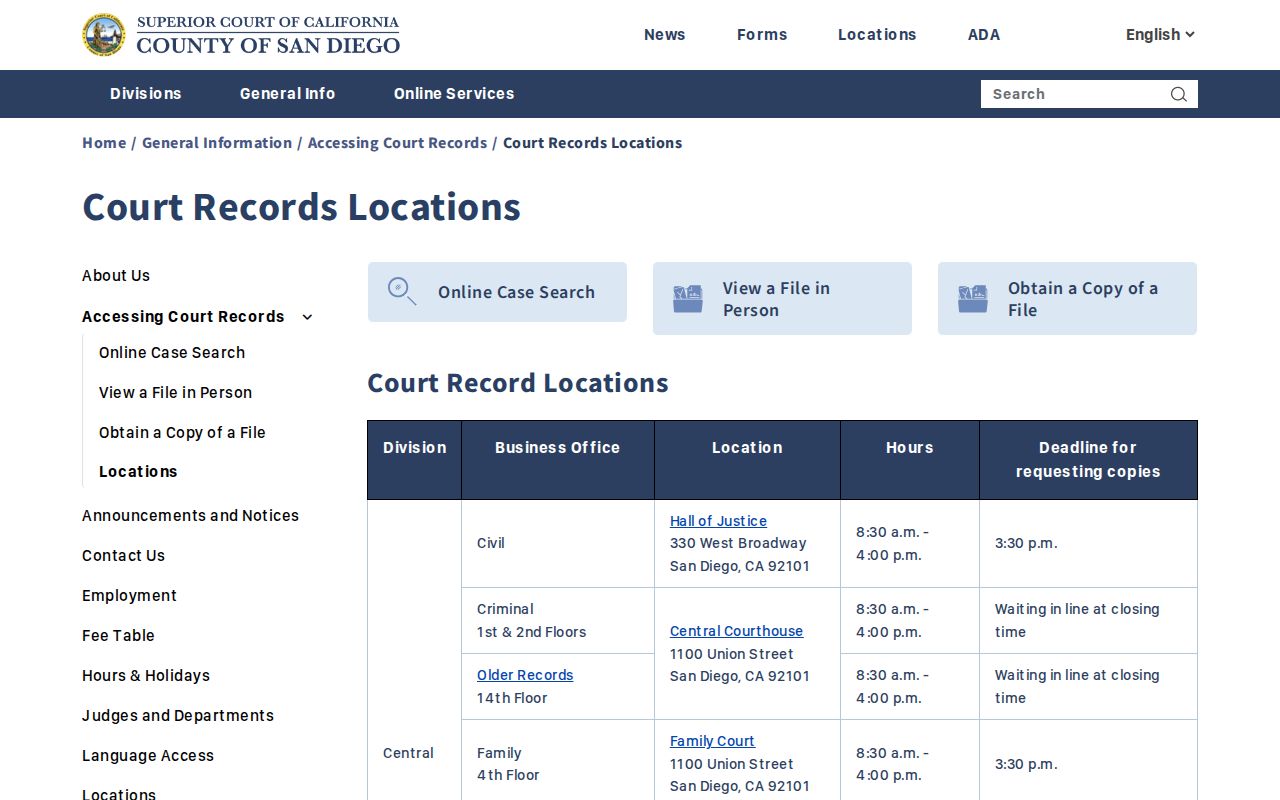
The directory links the record type to its proper counter, preventing a copy request from reaching the wrong courthouse.
Central Criminal
1100 Union Street
San Diego, CA 92101
First and second floors
8:30 a.m. to 4:00 p.m.
North County
325 South Melrose Drive
Vista, CA 92081
760-201-8600 x160
South County
500 Third Avenue
Chula Vista, CA 91910
Criminal and traffic, second floor
East County
250 East Main Street
El Cajon, CA 92020
Criminal and traffic business office
Criminal Case Stages in San Diego County
After prosecutors file charges, the defendant appears for arraignment and receives the formal allegations. Pretrial work can include motions, discovery, negotiations, and, in felony cases, a preliminary hearing. The matter may end through dismissal, a negotiated plea, or trial. If guilt is established, sentencing and later probation proceedings create more docket entries. Dates can shift, so a printed calendar should be checked against the current docket.
Case flow: Charges Filed › Arraignment › Pretrial › Plea or Trial › Disposition › Sentencing
The San Diego County District Attorney describes this progression through its criminal justice system overview. Court entries, not the original booking label, show whether filed charges changed along the way.
San Diego Traffic and Minor Offenses
The Traffic and Minor Offense Division covers Vehicle Code matters, some city ordinances, infractions, and minor misdemeanors involving subjects such as Fish and Game, Animal Control, transit, and trolley rules. These records can follow a different counter path from a felony or standard misdemeanor file. Infractions are also excluded from the public Court Index, making the division's own route important.
The court's division page illustrates that distinct jurisdiction.
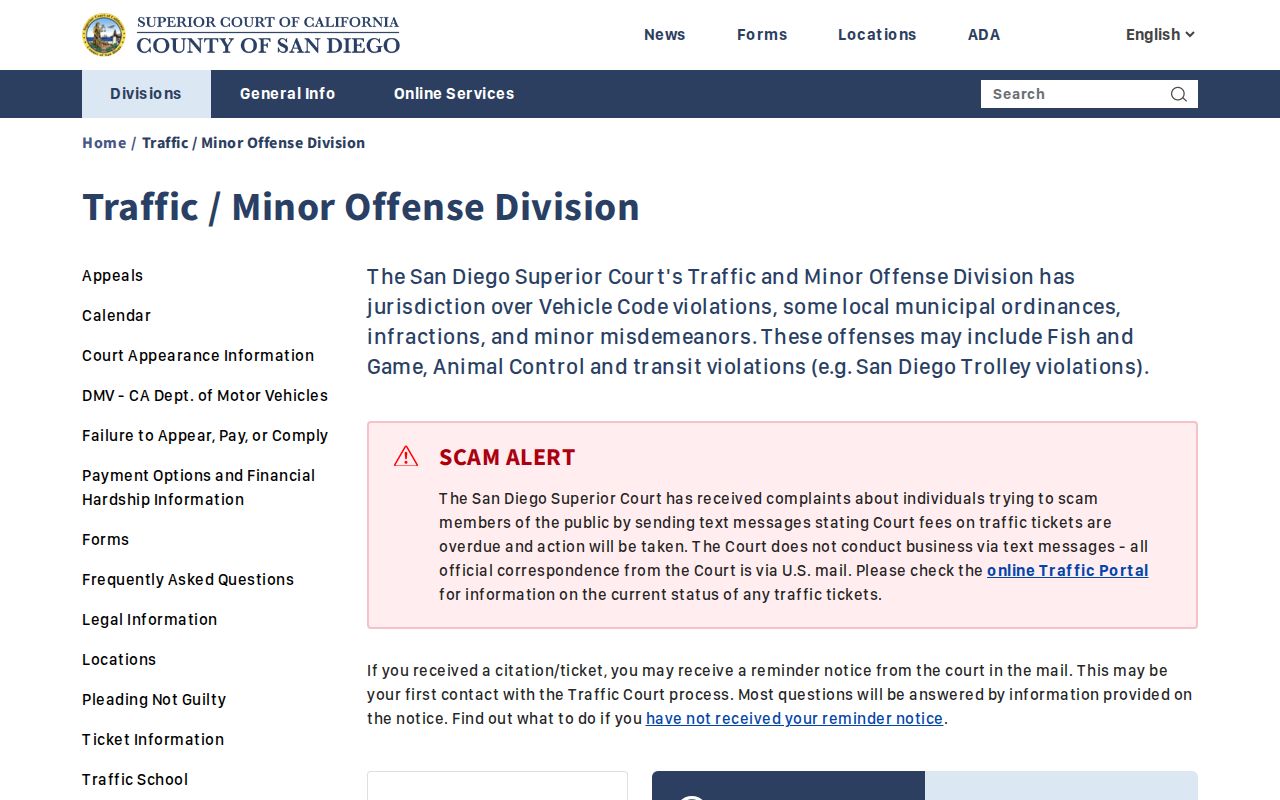
The page helps explain why a minor San Diego County matter may not appear where a searcher expects a criminal case result.
Older San Diego Court Records
Older Central Courthouse records may be stored on microfilm on the fourteenth floor at 1100 Union Street. Court staff do not perform microfilm research for the public. The person seeking a file may need to locate the record, identify pages, and request copies. The stated charge is 50 cents per page, with certification at $40 per document. Telephone and fax copy requests are not accepted for these older Central records.
For other criminal files, the court copy rules direct requests to the filing location in person or by mail. The court does not transmit court files electronically or by fax, and visitors may not use a camera or phone to photograph file contents. These limits make the branch and case number vital before a request is sent.
San Diego County court-file access is not the same as California DOJ criminal-history access. DOJ allows individuals to review their own statewide summary through fingerprint-based Live Scan, not a public third-party name search.
Access Rules for San Diego Case Records
California generally permits inspection of court records, but access depends on the record and method. California Rule of Court 2.503 limits remote electronic access to some case information. Juvenile files, sealed records, confidential material, victim details, and protected identifiers may be withheld or redacted. A sealed or confidential San Diego County file may require a court order even when a related index entry once existed.
If a case does not appear online, contact the filing branch with the name, approximate year, and known case number. Ask whether the record is excluded from the index, archived, on microfilm, sealed, or held elsewhere. The San Diego County Public Defender offices may also be relevant to a person reviewing their own represented case.
The official Public Defender contact page shows separate Primary, Alternate, Multiple Conflicts, and Assigned Counsel functions.
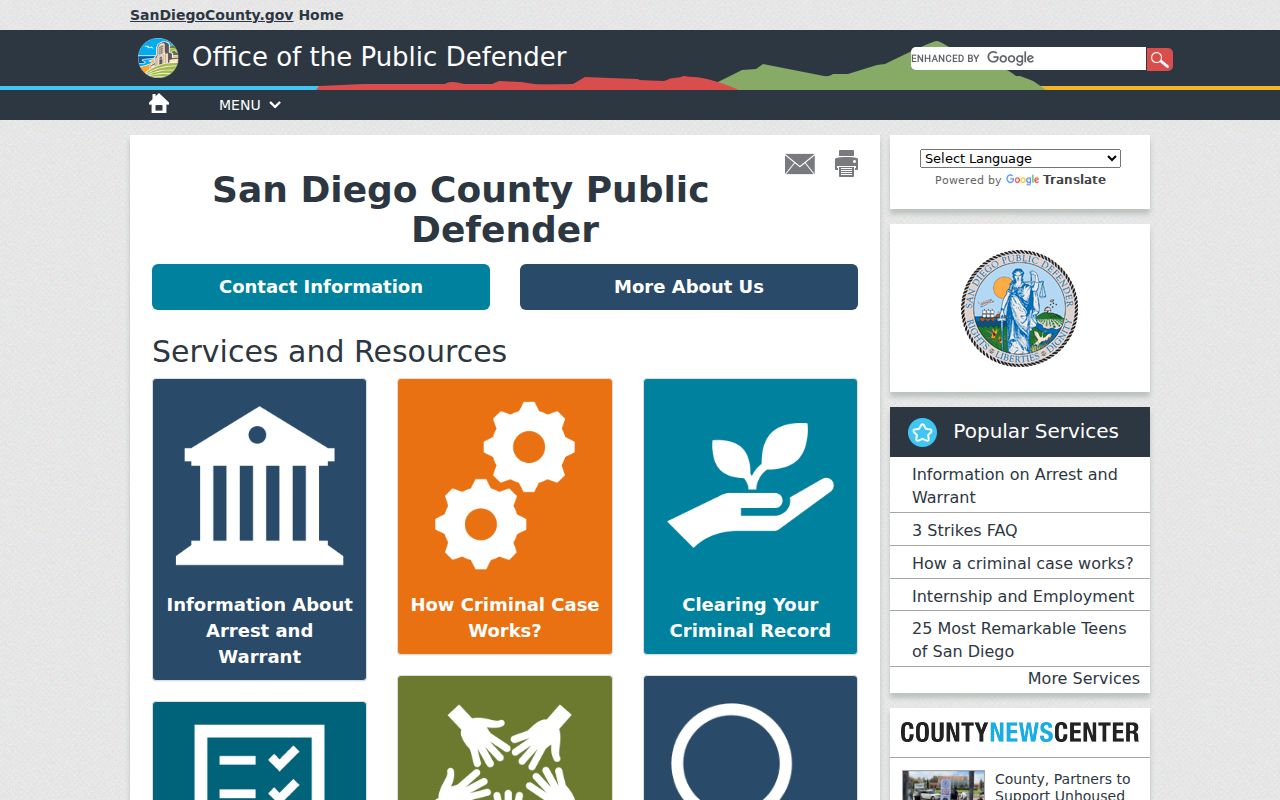
Those offices do not replace the clerk as record custodian, but the division shown can help a represented person identify the right defense office.
Note: A Penal Code 1203.4 dismissal adds a later court entry; it does not erase or seal the San Diego County case file.