
San Diego County Criminal History Checks
Start with the record that best fits the question. The free San Diego Superior Court Court Index locates many criminal cases by party name or case number. The Sheriff's Who's In Jail search covers people in county custody, while the separate warrant query reports many active adult criminal warrants. Police and sheriff report copies come from the agency that made the report. California DOJ does not offer the public a statewide name search for another person's criminal history.
A full name, date of birth, case number, booking number, and approximate event date can separate people with similar names. Search spelling variants, but do not assume a name-only match is the right person. A court index hit is a pointer to a file, not the complete file itself.
- Choose the court, custody, warrant, or police-report channel that matches the event.
- Enter the most exact name and date details the official form accepts.
- Compare the location, year, case type, and identifiers before selecting a result.
- Open or request the underlying booking report or court file.
- Confirm the disposition with the filing court, or review your own DOJ record through Live Scan.
San Diego Court Index Routes
The Court Index has two useful entry points. Party search accepts case type, case location, party type, filed-year range, last and first name, middle initial, and date of birth. Case-number search accepts the local number without dashes. Results help identify the case number and branch, but the index excludes infractions and may not show sealed or confidential matters. The court warns that index data is not the full official record.
| Field | Use | Tip |
|---|---|---|
| Case type | Narrow to criminal matters | Traffic infractions are not in the index |
| Case location | Choose a branch or all locations | The file stays with its filing court |
| Name and DOB | Distinguish parties | Use DOB when known |
| Case number | Direct search | Enter it without dashes |
The District Attorney case-information search offers another route by last name or court case number. Its screen shows the prosecution-side lookup rather than replacing the Superior Court file.
The official DA screen below shows why a case number is often more useful than a broad name query.
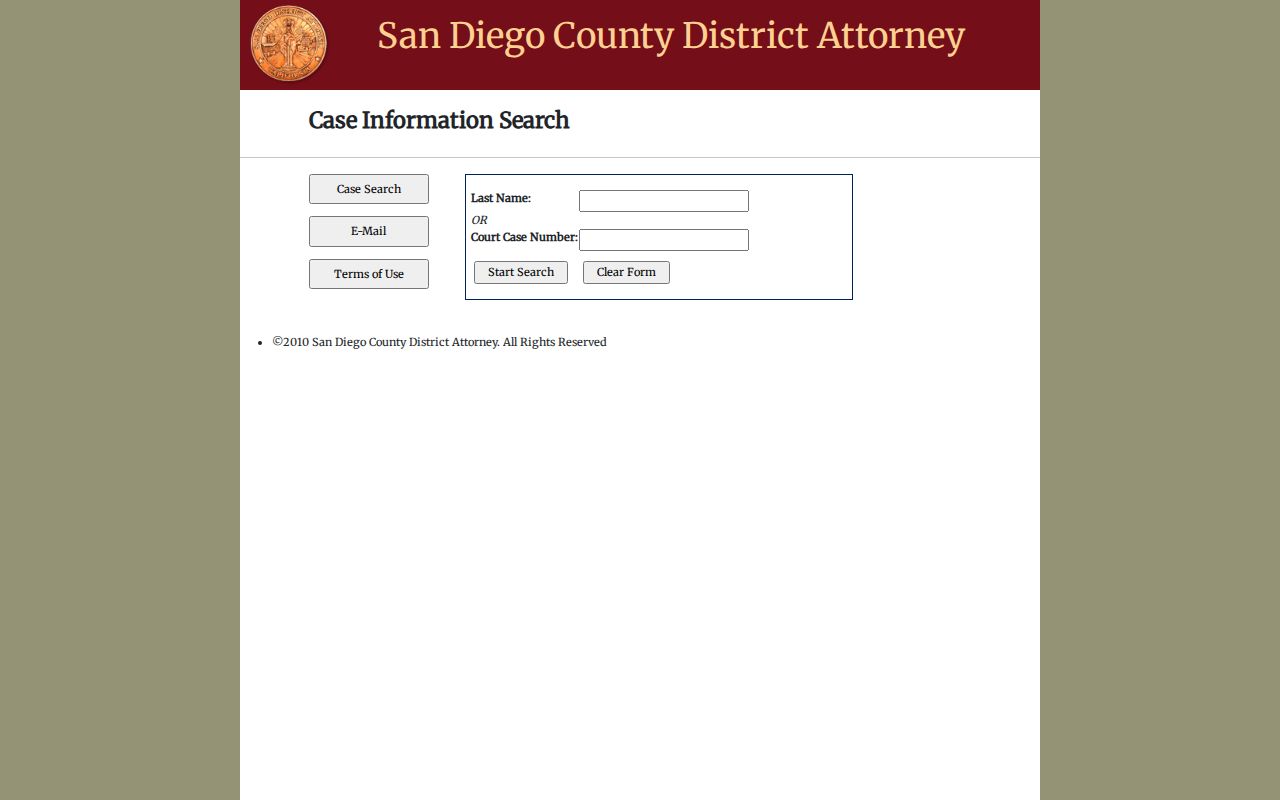
Use the result to locate the prosecution record, then confirm the filed charges and outcome at the Superior Court.
Official Background Checks in California
The California Department of Justice record-review process lets a person request their own state criminal history summary. It is fingerprint based. California DOJ does not authorize this product as a general public name check on someone else. A California resident completes the record-review Live Scan form, presents identification at a participating site, and submits fingerprints. DOJ charges its stated record-review fee, while the local provider adds a rolling fee that varies by location.
The DOJ subject-only page makes that limit clear.
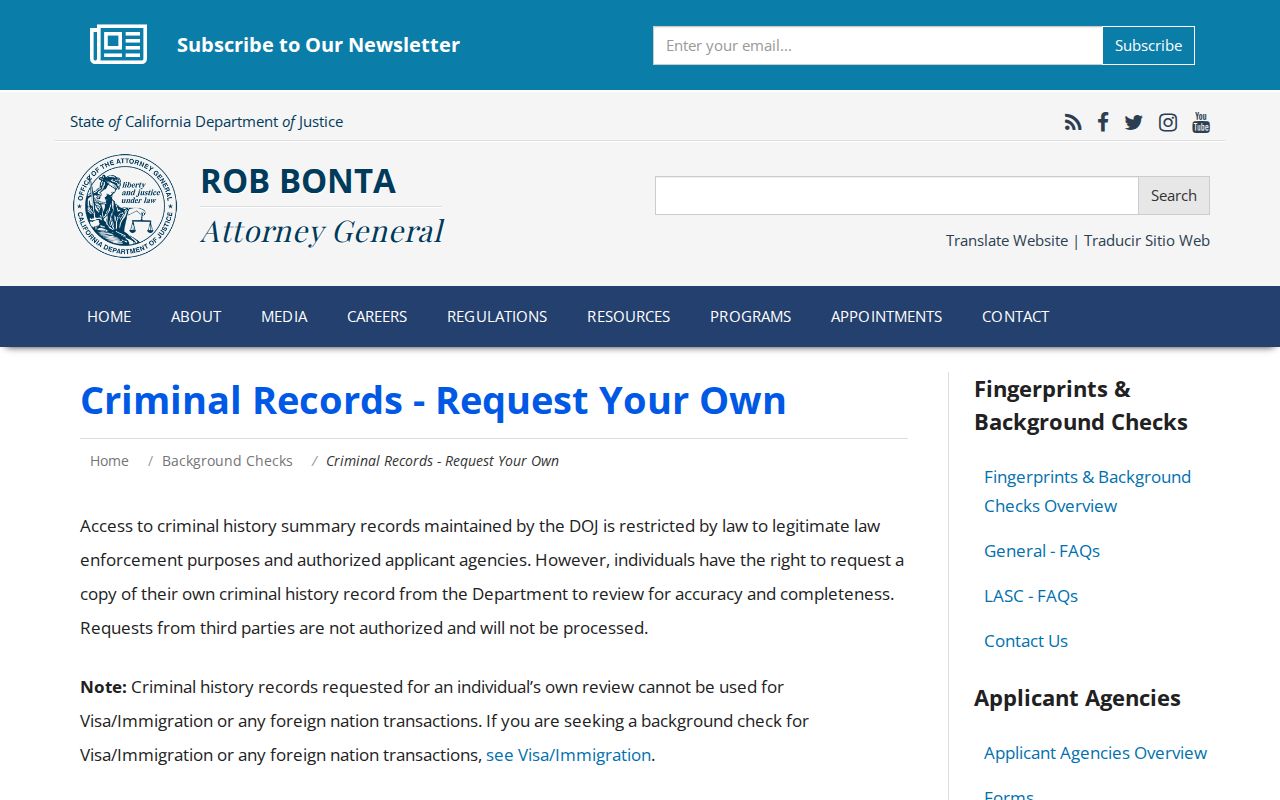
This channel is the correct one for examining your own California repository record and challenging an error.
DOJ's San Diego County Live Scan list can be filtered and sorted by rolling fee. Provider charges differ, so confirm the total before visiting.
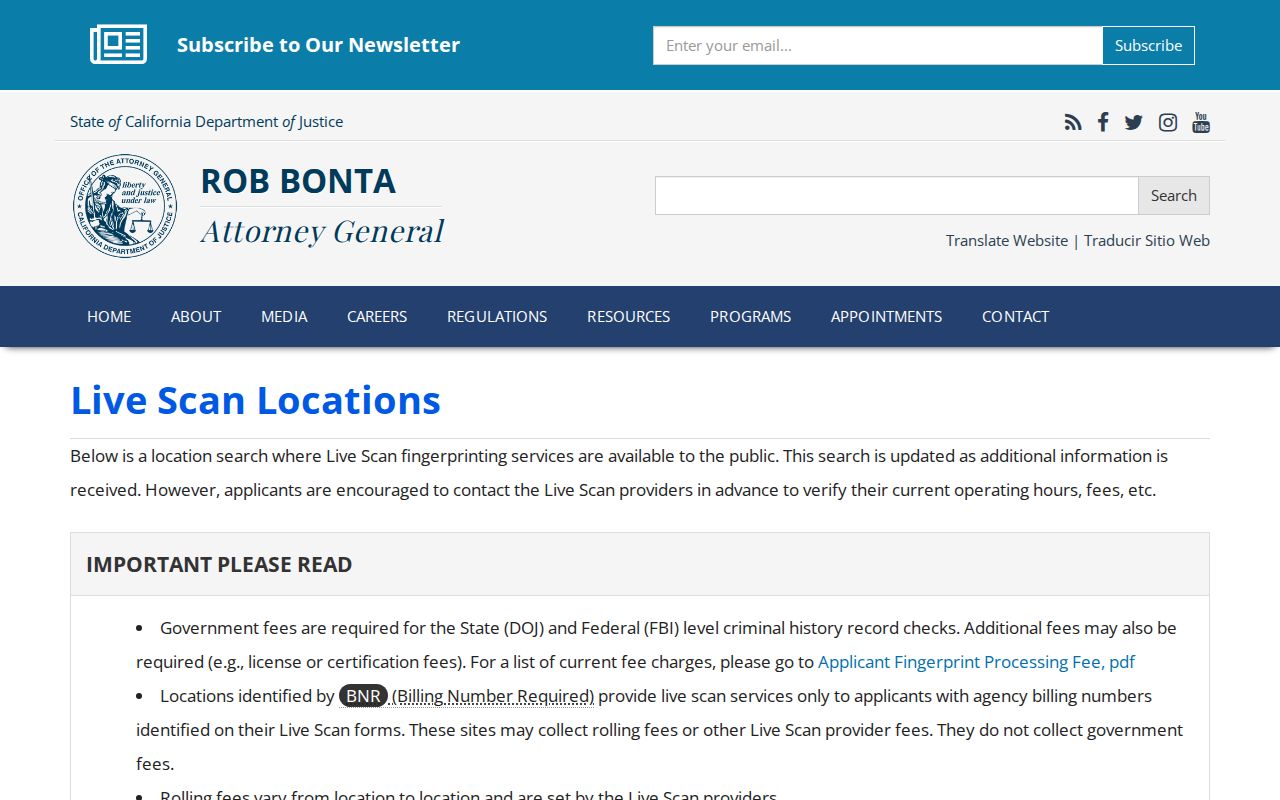
The list identifies official fingerprint submission sites without turning the process into a public name search.
Ridgehaven Records Hub
The San Diego County Sheriff's Records & ID Division handles crime, arrest, and accident report requests at 9621 Ridgehaven Court in San Diego. Requests may be made in person, by mail, through a station or substation, or through the Sheriff's Public Records Center. The general report fee is $20. A requester must provide identifying event details and valid identification, and release depends on the requester's legal right to receive the report.
Sheriff Records & ID
9621 Ridgehaven Court
San Diego, CA 92123
858-974-2222
Superior Court Central
1100 Union Street
San Diego, CA 92101
619-844-2500
Ridgehaven also houses the Sheriff's License & Criminal Registration Division for Penal Code 290 registration and tier-notification letters. Those are distinct services. A report request does not produce a DOJ rap sheet, and the registration desk does not replace the public Megan's Law search.
Kinds of Criminal Records
San Diego County criminal records are created in layers. A police or sheriff report describes an investigation. Booking data records intake into a detention facility. The District Attorney decides which charges to file, and the Superior Court case file tracks arraignment, motions, pleas, trial, disposition, and sentence. A warrant is a court order carried in law-enforcement systems. Probation records concern county supervision, while CDCR records concern state custody and parole.
- Arrest and booking records: held by the arresting agency and detention custodian.
- Criminal case files: maintained by the Superior Court branch where charges were filed.
- State summaries: maintained by California DOJ and available to the subject through fingerprint review.
- Warrants: queried through the Sheriff, with court confirmation when needed.
- Custody and supervision: split among the Sheriff, county Probation, and CDCR.
Federal cases form another layer. The U.S. District Court for the Southern District of California keeps its own files, separate from San Diego Superior Court.
Federal dockets are found through PACER or the federal clerk, not through the county Court Index.
Custody Data Is Not History
Who's In Jail shows current San Diego County custody information and recent booking details. It is not a criminal history report. Someone released from custody may disappear from the active result even though a court case continues. The Sheriff also cautions that a listed release date may change. Chula Vista Police uses a temporary city booking facility before many arrestees move to a Sheriff's jail, so the first hours of a custody search can require checking more than one agency.
The official custody form shown below asks for first and last name.
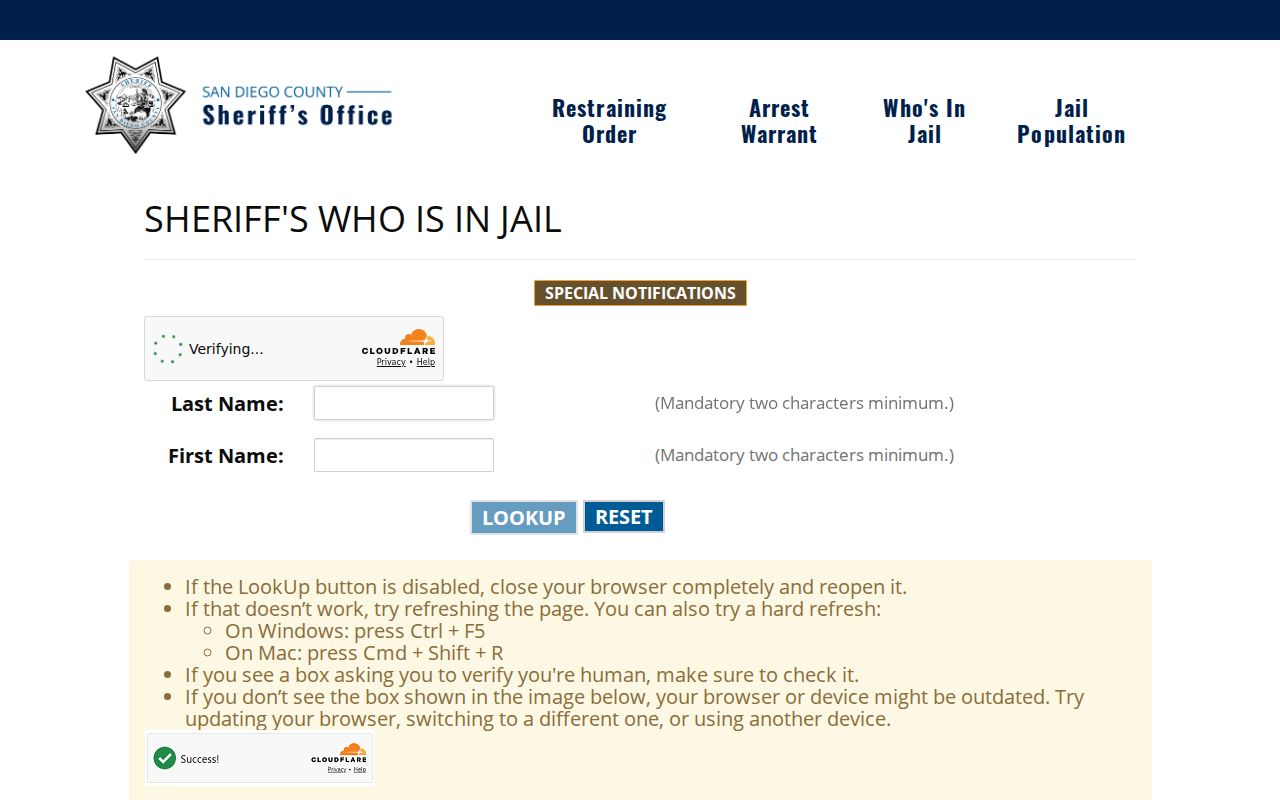
A match may show booking and housing facts, but a final charge and disposition belong to the court record.
For people in California state prison, use California Incarcerated Records and Information Search, known as CIRIS.
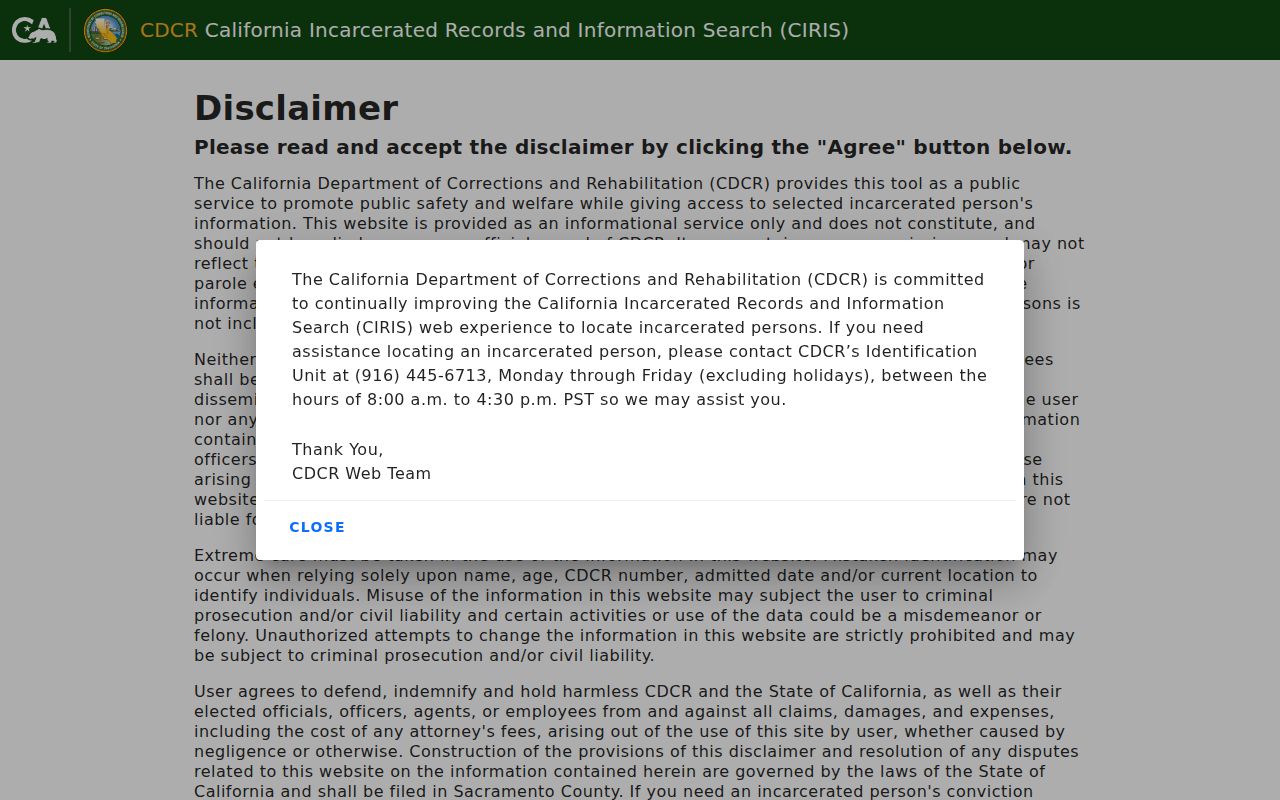
CIRIS covers CDCR custody, not a stay in a San Diego County jail or county probation supervision.
San Diego County Criminal Records: What They Contain
No single San Diego County criminal history screen contains every field. Identity information may include name, aliases, date of birth, physical descriptors, and agency numbers. Arrest records can add the event date, arresting agency, booking number, alleged charge codes, bail, and custody location. Court files add counts, statute citations, pleas, motions, hearing dates, disposition, and sentence. A state summary links fingerprint-supported arrest events to reported outcomes.
| Name & identifiers | Names, aliases, birth date, and agency or case identifiers. |
|---|---|
| Arrest / booking data | Agency, booking date, booking number, charge codes, bail, and custody status. |
| Charges & statutes | Alleged arrest charges and the separate counts prosecutors filed. |
| Disposition | Dismissal, acquittal, conviction, plea, or another recorded court outcome. |
| Sentence | Custody, fines, probation, and other terms ordered by the court. |
| Supervision status | County probation or state custody and parole information, where public. |
Read the latest court disposition before treating an arrest charge as the final offense. Charge codes in a jail or warrant screen may not use plain language, and prosecutors can file different counts after reviewing the report.
Four San Diego Court Regions
Criminal files are spread across Central, North, South, and East County courthouses. Central matters are handled in downtown San Diego. North County files route through Vista, South County matters through Chula Vista, and East County matters through El Cajon. The correct branch matters because the court says copies must be requested at the filing location, in person or by mail. Court files are not transmitted by fax or electronically on request, and visitors may not photograph paper files with a camera.
The Superior Court criminal division page identifies the regional structure.
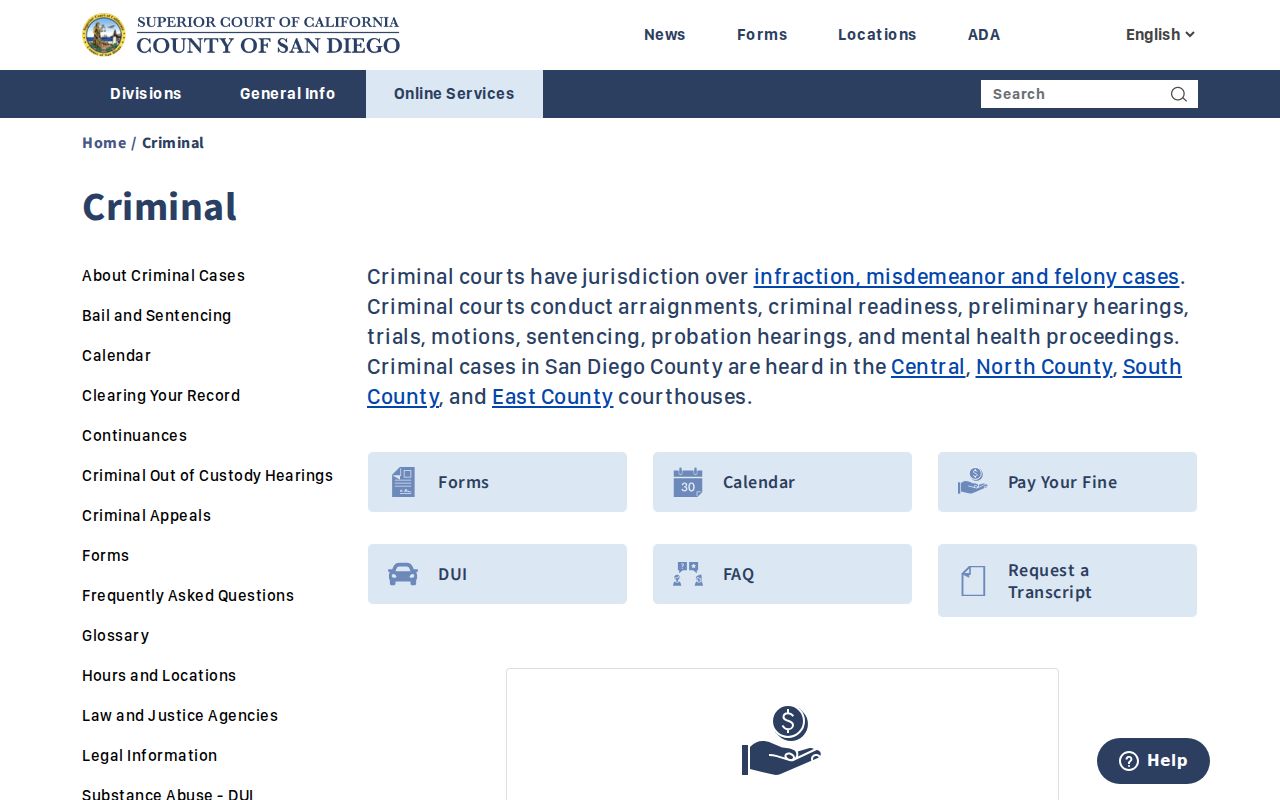
The index location and case number should be written down before ordering a file from the proper counter.
Older Central Division records may be held by Central Records on the Hall of Justice's 14th floor. Copies are 50 cents per page, and certification is $40. These charges differ from police-report fees and DOJ fingerprint costs.
California Public Access Laws
The California Public Records Act creates a broad right to inspect records held by state and local agencies, but it also recognizes exemptions. Investigatory records, confidential personal data, juvenile matters, sealed files, victim details, and records whose disclosure would impede an investigation can be withheld or redacted. Court records follow court access rules as well as constitutional and statutory limits. California DOJ criminal history summary information has tighter dissemination rules than an ordinary local public record.
Key California laws:
Government Code sections 7920.000-7931.000 establish the California Public Records Act.
Penal Code section 11105 limits dissemination of state criminal history information.
Penal Code section 13300 governs access to local criminal offender record information.
Penal Code section 290.46 governs public Megan's Law information and misuse.
Ask the holding office for a written basis when material is withheld. Redaction does not always mean the entire report is closed.
Hourly San Diego Warrant Data
The Sheriff's Warrant Query by Name accepts last, first, and middle name. Its data is updated hourly, but the Sheriff warns that information can be up to 24 hours old. Scheduled maintenance occurs Wednesdays around noon. The Sheriff's Warrant Office also answers questions at 858-974-2110, and the Warrant Tip-Line is 858-974-2327. A person who finds their own possible warrant should verify it with the warrant office or the court rather than relying on a screen capture.
The official warrant query displays both the fields and the timing warning.
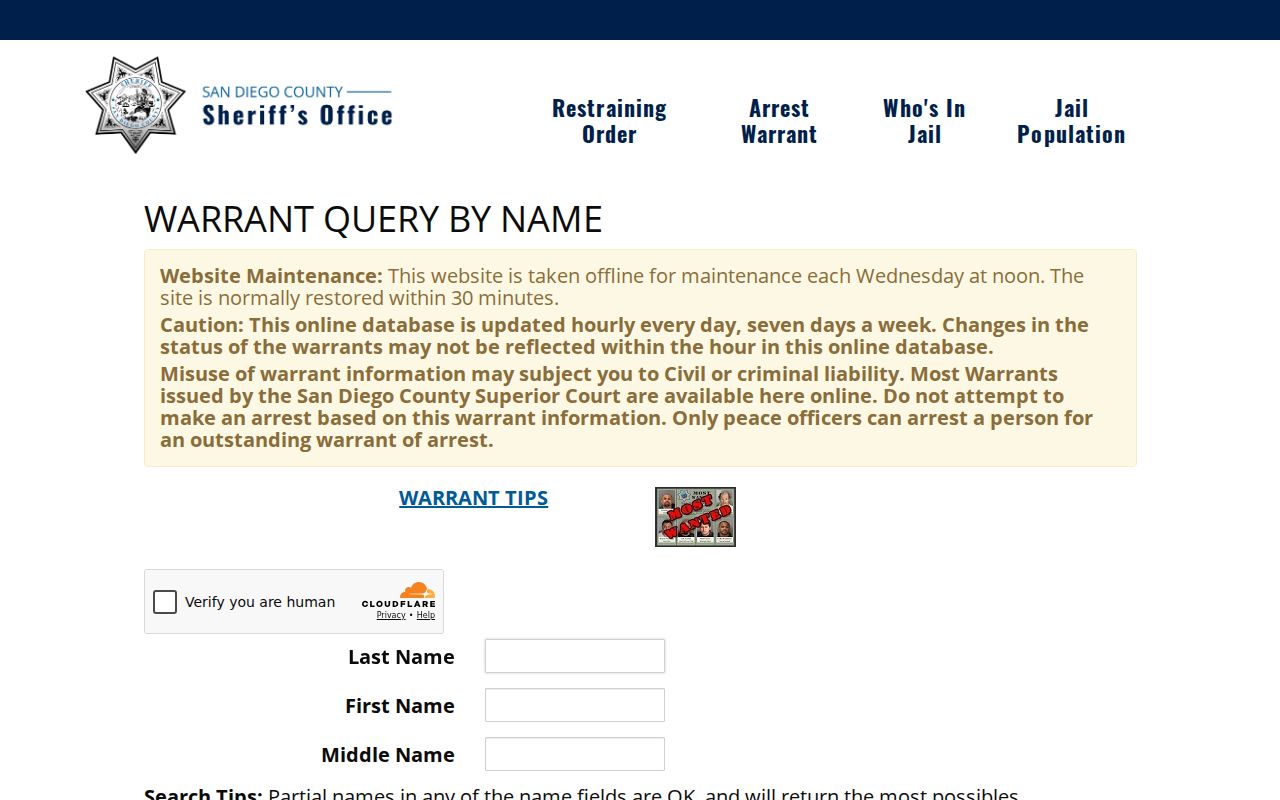
The current court order controls if the web result and courthouse information differ.
Bench warrants can follow a failure to appear or failure to obey a court order. Charge descriptions on the Sheriff screen may be statutory shorthand. Confirm the code through California Legislative Information and then read the court case file.
Restricted, Sealed & Expunged Records
California uses several forms of record relief. Penal Code section 1203.4 can permit an eligible person to withdraw a plea and obtain a dismissal after probation requirements are met. The San Diego County Public Defender stresses that this dismissal is not physical erasure and does not seal every record. Penal Code section 1203.4a addresses certain misdemeanor cases without probation. Eligible arrest records may qualify for sealing under Penal Code section 851.91, while juvenile sealing follows separate rules.
Automatic Clean Slate relief can change what appears without removing every record from all official systems. A sealed or confidential case may not appear in a public search even though authorized agencies can still access it. The San Diego County Public Defender's expungement page explains local screening and application help. Check the actual order and each portal after relief is granted, since updates may not reach every system at the same time.
Note: A dismissal under Penal Code section 1203.4 is meaningful relief, but it is not the same as destroying or sealing the file.
San Diego Probation Record Gaps
San Diego County Probation has no public name lookup for current county supervision. Verification usually comes from the court case and probation order, the department's Adult Records unit, or the assigned supervision office. Adult Records can be reached at 619-515-8202. The department has offices in Central San Diego, Chula Vista, El Cajon, Vista, and other county locations, which reflects the same regional justice geography seen in the courts.
County probation and state parole are different. The County of San Diego supervises local probation. CDCR's Division of Adult Parole Operations handles state parole, while the Board of Parole Hearings has separate decision-making duties. CIRIS may provide limited state custody information, but it does not disclose the full county probation file. If a court index shows probation as part of a sentence, the written judgment and probation order are the best starting documents.
City-by-City Criminal Records in San Diego County
City police departments create and retain their own incident and arrest reports, while criminal charges move into the county Superior Court. San Diego Police has a records counter and public-records portal. Chula Vista Police operates a temporary booking facility before transfers to Sheriff's custody. Oceanside Police maintains a large local report archive and serves the North County court region. These local routes add the first report layer to San Diego County criminal history research.
San Diego Record Check
1,386,932 residents in 2020. SDPD records and downtown court channels.
Chula Vista Record Check
275,487 residents in 2020. City reports, temporary booking, and South County court files.
Oceanside Record Check
174,068 residents in 2020. OPD records and North County court routing.
Odyssey Changed Criminal Case Access
San Diego Superior Court moved criminal case files into the Odyssey case-management system during a planned February 2026 transition. The modernization placed criminal matters on the same platform used for most other case types. A temporary outage accompanied the move. That milestone helps explain why an older instruction, saved link, or case-screen layout may no longer match the current public system.
The court also announced that a 2.75 percent vendor service fee may apply to certain card, check, prepaid, or mobile payment services beginning July 1, 2026. That payment fee is not a copy fee and does not change the separate charge for certified or paper records. Verify current portal status and charges on the court's official criminal page before paying. Online access can locate a case, but an official certified document still comes from the clerk.
The DOJ Applicant Background Check Status page is another screen with a narrow role: it uses an ATI number and date of birth to track an authorized fingerprint submission.
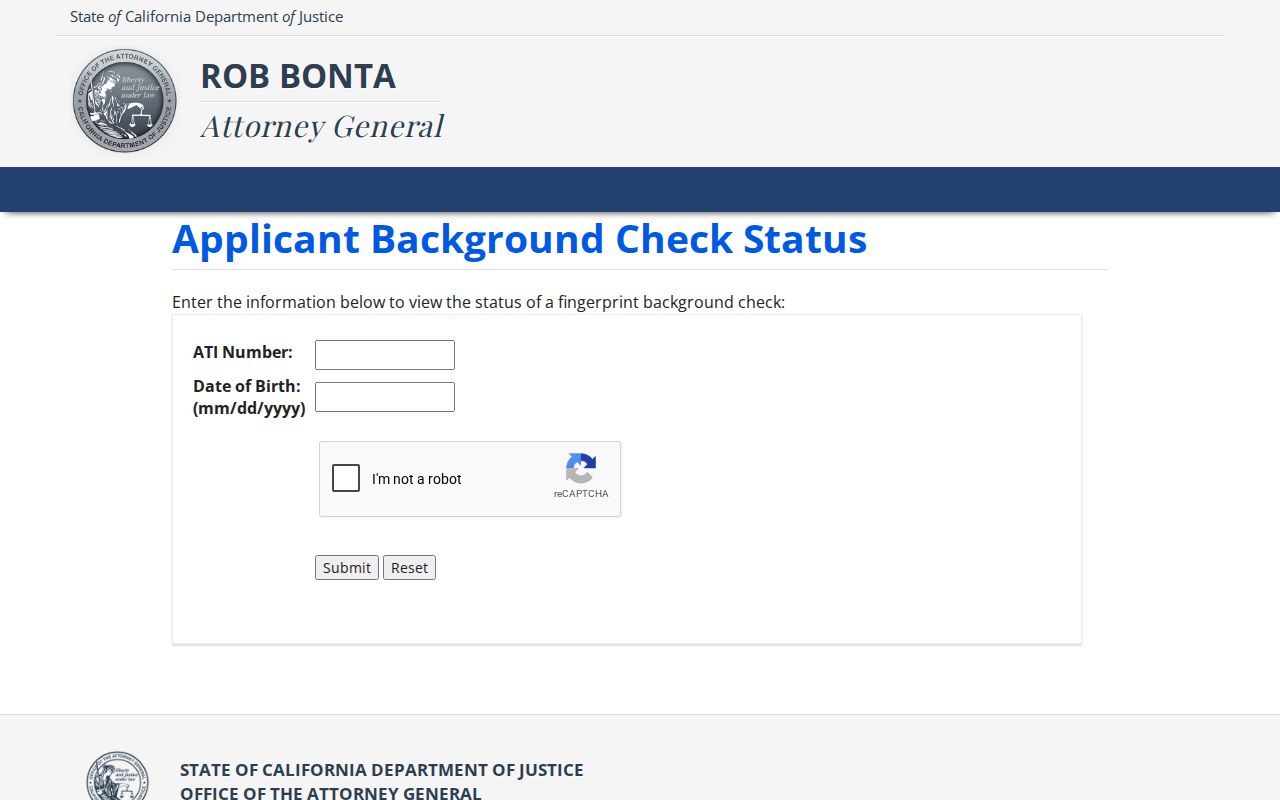
It does not display the criminal history result and is not a public person-search portal.